How to Design a Simple Microcircuit at Home
12/30/2025
Step-by-Step Microcircuit Reading Techniques for Beginners
12/30/2025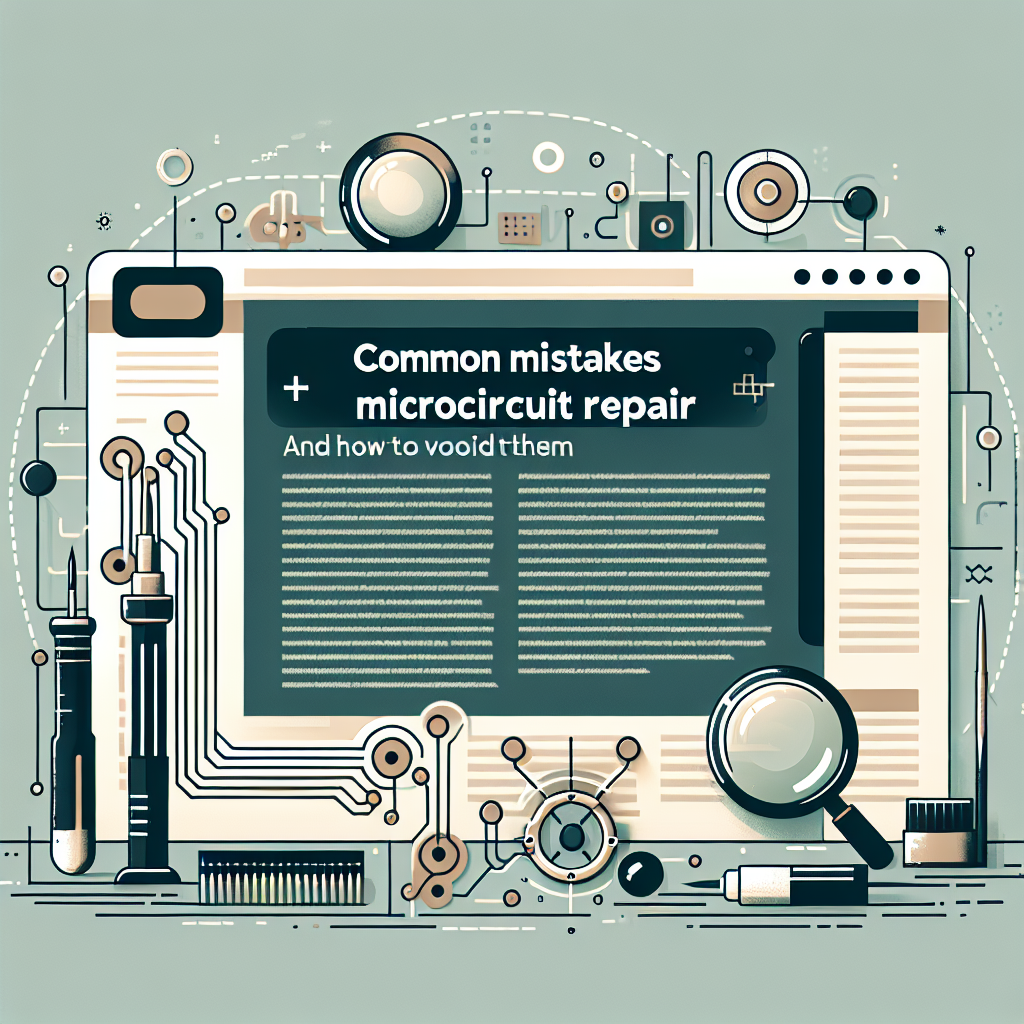
Common Mistakes in Microcircuit Repairs and How to Avoid Them
Understanding Microcircuit Repairs
Microcircuits are essential components in modern electronics, playing a crucial role in everything from smartphones to computers. Repairing these delicate devices requires both skill and knowledge. However, even experienced technicians can make mistakes that lead to further damage or ineffective repairs. In this article, we will explore common pitfalls in microcircuit repairs and provide actionable advice to help you avoid them.
Common Mistakes in Microcircuit Repairs
Identifying and understanding common mistakes can significantly improve your repair outcomes. Here are some frequent errors:
- Inadequate Diagnosis: Jumping to conclusions without thorough testing may lead to misdiagnosis.
- Improper Tools Usage: Using the wrong tools can damage microcircuits irreparably.
- Neglecting ESD Precautions: Failing to protect components from electrostatic discharge can ruin sensitive parts.
- Ignoring Schematic Diagrams: Disregarding schematic diagrams can cause confusion and mistakes in repairs.
- Overlooking Component Specifications: Not adhering to component specifications may lead to compatibility issues.
1. Inadequate Diagnosis
One of the most critical steps in microcircuit repair is accurate diagnosis. Many technicians rush through this phase, resulting in unnecessary replacements or repairs. Take the time to test each component individually using multimeters or oscilloscopes. Look for signs of damage, such as burnt traces or corroded contacts, to ensure you correctly identify the issue.
2. Improper Tools Usage
Using unsuitable tools can cause more harm than good. For instance, using a soldering iron that is too hot can damage the microcircuit board. Invest in a quality soldering station with adjustable temperature settings. Additionally, ensure you have the right tips for precision work.
3. Neglecting ESD Precautions
Electrostatic discharge can destroy sensitive microcircuit components. Always work on an ESD-safe surface and wear an ESD wrist strap. Avoid wearing clothing that generates static electricity, such as wool or polyester.
Best Practices to Follow
Implementing best practices can streamline your repair process and mitigate errors. Here are some tips to enhance your repair skills:
- Always Use a Schematic: Referencing schematics can guide you through the repair process.
- Document Your Process: Keep detailed notes on what repairs were made and any issues encountered.
- Test After Each Repair: Conduct tests after every individual repair to confirm functionality.
- Practice Patience: Take your time to avoid careless mistakes that can lead to bigger problems.
- Seek Training: Consider taking courses or workshops to improve your skills.
Common Mistakes to Avoid
Recognizing and avoiding these common mistakes can save time and resources. Some additional errors include:
- Not Verifying Power Supply: Always check the power supply before making repairs; a malfunction here can lead to further complications.
- Skipping Initial Inspections: Failing to inspect for visible damage can result in overlooking critical issues.
- Not Using Proper Cleaning Techniques: Dirt and debris can impede repairs; always clean the area around the microcircuit.
Conclusion
Repairing microcircuits demands attention to detail and a methodical approach. By understanding common mistakes and implementing best practices, you can enhance your skills and ensure successful repairs. Remember to diagnose thoroughly, use the right tools, and always follow safety protocols. With practice and patience, you can avoid these pitfalls and become proficient in microcircuit repairs.